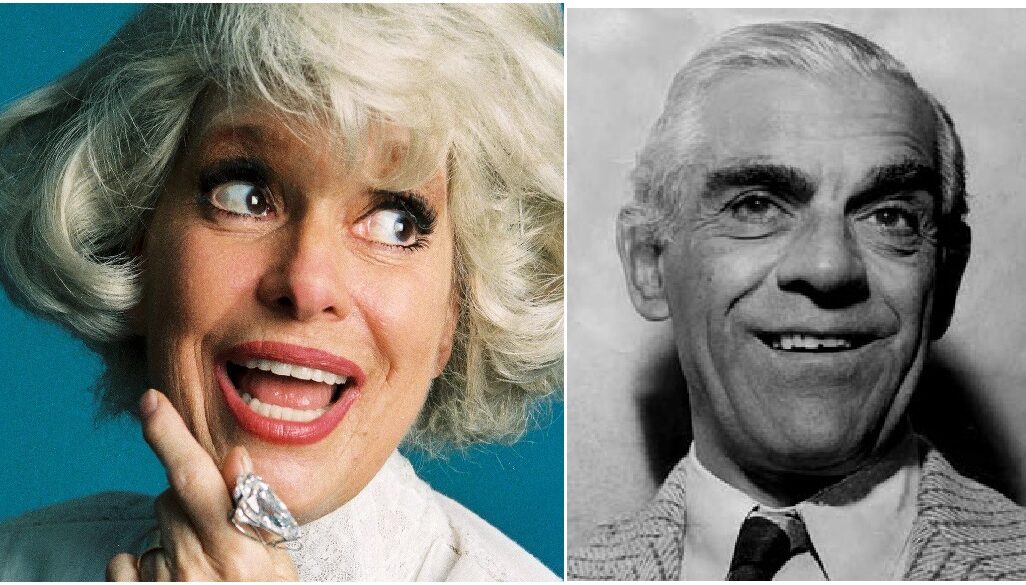
Although Caedmon Audio had set out with the intention of having the authors recite their own work for their recordings, it soon became common practice to hire actors to voice narrations for dramatic effect. This was especially prevalent for children’s audio recordings, as the stories and rhymes were often recited with whimsical singing and tone of voice. Marianne Mantell (née Roney) had gone on record to say that the goal of the records was not necessarily to entertain the children but more to “re-create the original voice of the author.” Caedmon records promised a “no frills” approach to their work. The lines recorded were straight from the source in order to keep the intent of the story as faithful as possible. Unlike earlier renditions of children’s audiobooks (e.g. mini musical record books designed for children published by HarperCollins called “Bubble Books” and graphic cardboard images with built-in records called “Talking Books”) where emphasis was placed more around a gimmick to keep kids amused though musical storytelling, Caedmon records were more direct and minimalist with the objective of creating an intimate space linking reader/author and listener. Actors Boris Karloff and Carol Channing were two of the most prominent to be used in this practice.
Boris Karloff, born William Henry Platt, was an English actor best known for portraying the monster in the 1930s Frankenstein films as well as voicing and narrating the 1966 animated holiday special Dr.Seuss’ How the Grinch Stole Christmas. Spoken-word performances by Karloff had become common for the actor by the 1960s, lending his voicing talents to both children’s recordings and horror anthologies. Karloff had started his relationship with Caedmon when he voiced the title role of Shakespeare’s Cymbeline. Children’s stories in Karloff’s repertoire included Sergei Prokofiev’s Peter and the Wolf with the Vienna State Opera Orchestra, Rudyard Kipling’s Just So Stories, Mother Goose Nursery Rhymes, Three Little Pigs and Other Fairy Tale Stories, et al. In his lifetime Karloff voiced over twenty children’s recordings for Caedmon Records.
Multi-performer Carol Channing has appeared in numerous television shows, stage plays and voice recordings throughout the span of her illustrious career. Notable recordings from Channing include the Madeline series from late 1950’s to 1970s, Peter and the Wolf, The Purple Cow, The Year Without Santa Claus, and Winnie the Pooh that was both read and sung by her.
Having discussed the history of how Caedmon decided to use voice actors , we will hear from those actors, gaining a sense of the distinctive voice of Caedmon products as articulated by Karloff and Channing.

In Mother Goose, flutes, harp strings and an occasional drumbeat play along while Cyril Ritchard, Celeste Holm, and Boris Karloff recite lines of Mother Goose (here,“The House that Jack Built”), keeping up with the steady pace of the rhymes, matching the rhythm of the instruments. The tempo builds excitement as Karloff almost runs out of breath, excitedly reciting the lines while repeating the phrase “this is the house that Jack built” at the end (1:53-2:06). The lines are then repeated in a more monotone and lower register, creating interest to the listener who is experiencing a multitude of emotions and range while picking up the words and phonetic value of the song-style poem (2:07-2:23). Karloff’s voice intonations are heavily emphasized in the piece, particularly the rolling of the “r’s” and the change of tone to convey different emotions.

Carol Channing recites lines of Madeline while French accordion music plays melodically in the background, often matching the tone of the story and Channing’s narration (0:30-0:33) in comparison to Karloff, Channing reads lines in a slower pace of voice almost as if she’s reading the book out loud to a child while they follow along. Performance elements are added by Channing’s choice of accent to mimic the French doctor (1:36-1:44) as well as her dramatic shift in tone to reflect the atmosphere of the scene being played out in the story. Emotions of the characters are brought to life by Channing’s commitments to melodramatic dialogue. Note how her voice exaggerates the sadness when mimicking the young girls and their desire to remove their appendixes (4:07-4:14).
The voices provided by Caedmon represent yet another example on how the renowned company put its merits into delivering the best sensory experience to its audience. The dynamic records above are embellished by way of the robust performances provided by actors as well as extratextual sounds, like musical scoring. These recordings thus present some contrast with Dylan Thomas’ method of narration, where the final product only featured his voice. Cofounder Barbara Holdridge went on record to say that although there is a difference between actors and writers, having an actor recite the words is merely an elucidation of the author’s intent, almost as if the actors are a voice for use, a vessel for the author’s objective. In the end, although the methods of storytelling differ, the broad intent of Caedmon to be the voice of the writer has always remained intact regardless of genre/performer. These formal experiments with an emerging medium show that the company was ahead of the curve when delivering their work to the masses, presenting, as they put it vividly, a “third dimension” of print.

